Natural Gas Storage Outlook
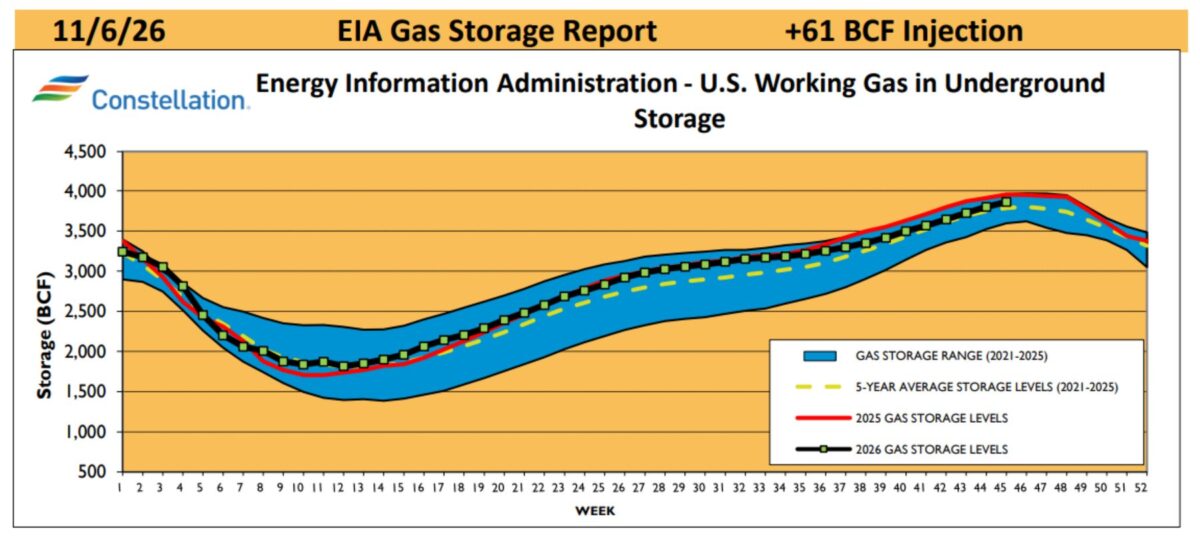
- Another strong injection of +61 Bcf in the first week of withdrawal season. We will likely see another injection to cover the period up to November 13th, but after that we expect actual withdrawals to occur.
- It looks like we will begin withdrawal season with 3,833 Bcf of natural gas in storage, which is 88% of capacity and 2% above the five-year average.
Big Reasons to Buy Now
What Should You Do?
- If you are using more than a million kWh annually, talk to your energy advisor about moving to a Load Following Index strategy or Managed Index strategy. This strategy allows you to buy blocks of energy when it is favorable and let the rest stay on the Day Ahead index rate. This is an excellent strategy that eliminates the premiums suppliers often place on the components of your electricity rate when they must fix it.
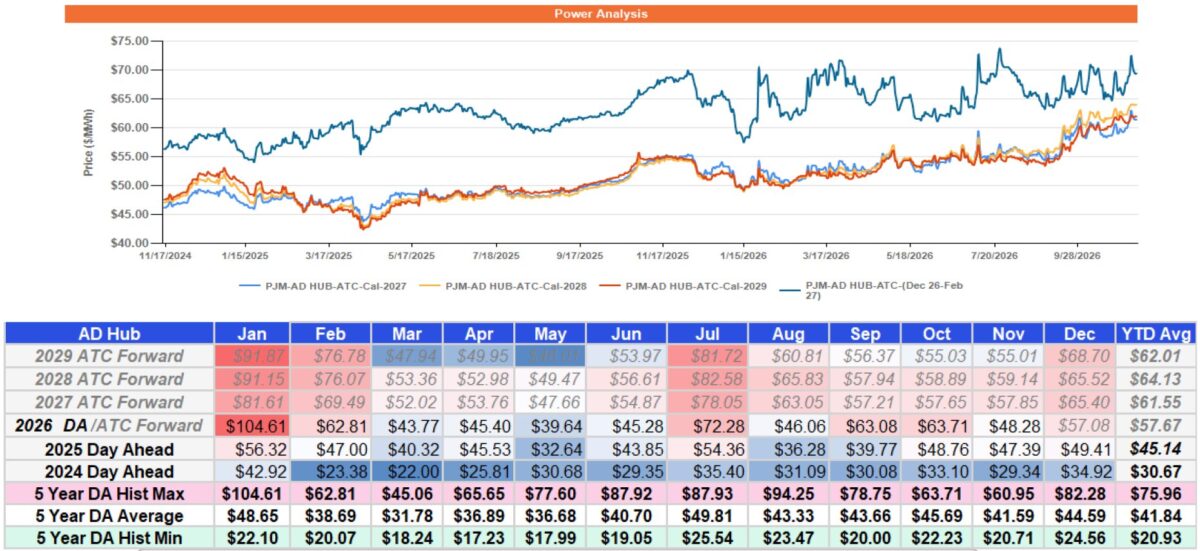
- Look at longer term agreements to allow you take advantage of lower blocks of energy in the future. 2029 is currently priced below market expectations. You may want to think about locking up 50-75% of the off-peak months or even locking up 75% of all of 2029, using the shoulder months to offset January and July, the highest months being priced now in 2029. It might be advisable to also hedge 25% of the coming January & February right now and then look at it again just before Thanksgiving. If it remains this low, look at locking up another 50%. One winter event can ruin pricing for the winter. Last winter saw mild temperatures in December, but a cold front that kept temperatures below freezing for much of the PJM Electric Grid for 15 days straight in late January early February sent pricing over $120.00 per MWh. Hedging 25-75% of next winter helps mitigate any random weather events as well as taking advantage of some low pricing currently available.
- Natural Gas users should be on what is called a NYMEX+ strategy. This generally provides greater savings than a fixed all-in contract. A NYMEX+ strategy takes an ‘adder’ that covers the suppliers’ costs for storage and the cost of doing business in that utility and adds it to the NYMEX settlement price for that month. So, if you have an ‘adder’ of $0.75 cents per Mcf and place that upon last years NYMEX Settlement price of $3.004, you will have a rate of $3.754 for that month. Much better when you consider fixed pricing for gas currently does not go below $4.50 per Mcf.
- Larger gas users that go through more than 50,000 Mcf a year should explore a managed strategy like the Managed Index strategy for electricity. Look at buying up blocks of gas in Winter 2027 which still has lower costs than normal.
NYMEX Nat Gas Calendar Strips
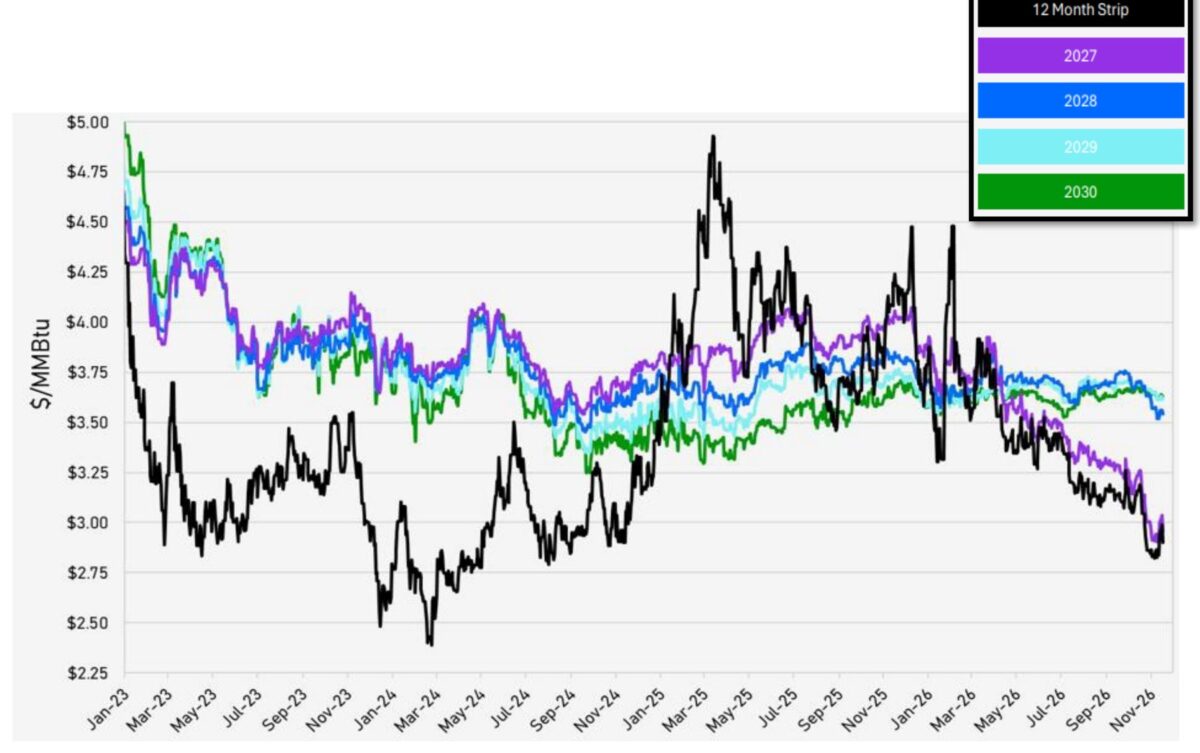
- The 2026 Calendar Strip has remained low in large part due to the onset of the El Nino in May.
- We have begun to see a rise in prompt month pricing for December as we head into the colder months, but we are still almost a dollar lower than we were a year ago when pricing was over $4.00
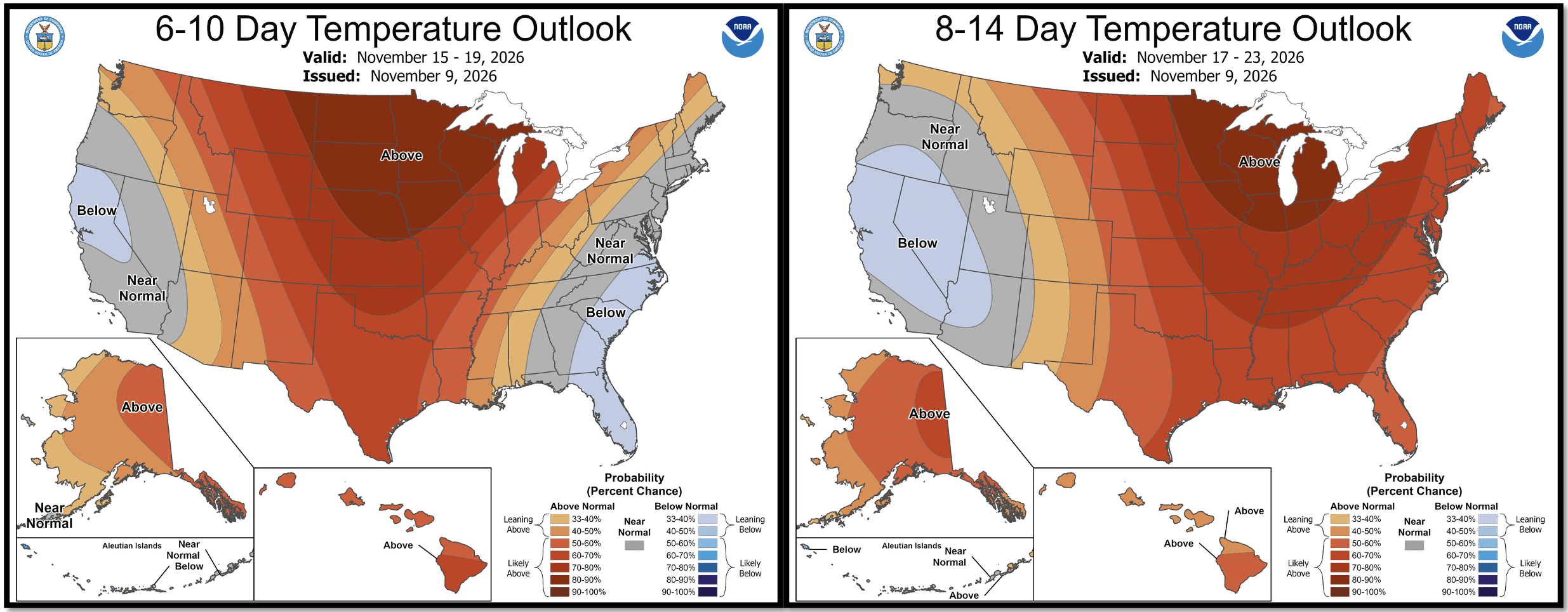
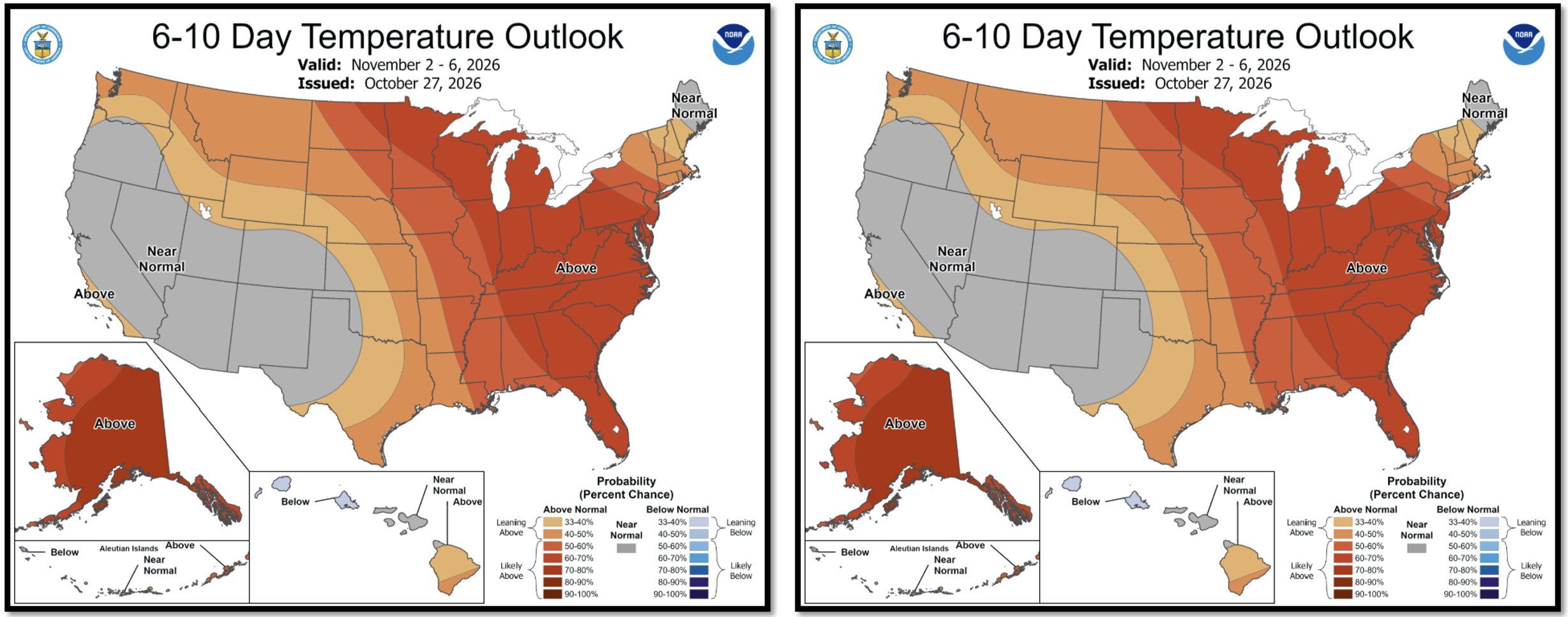
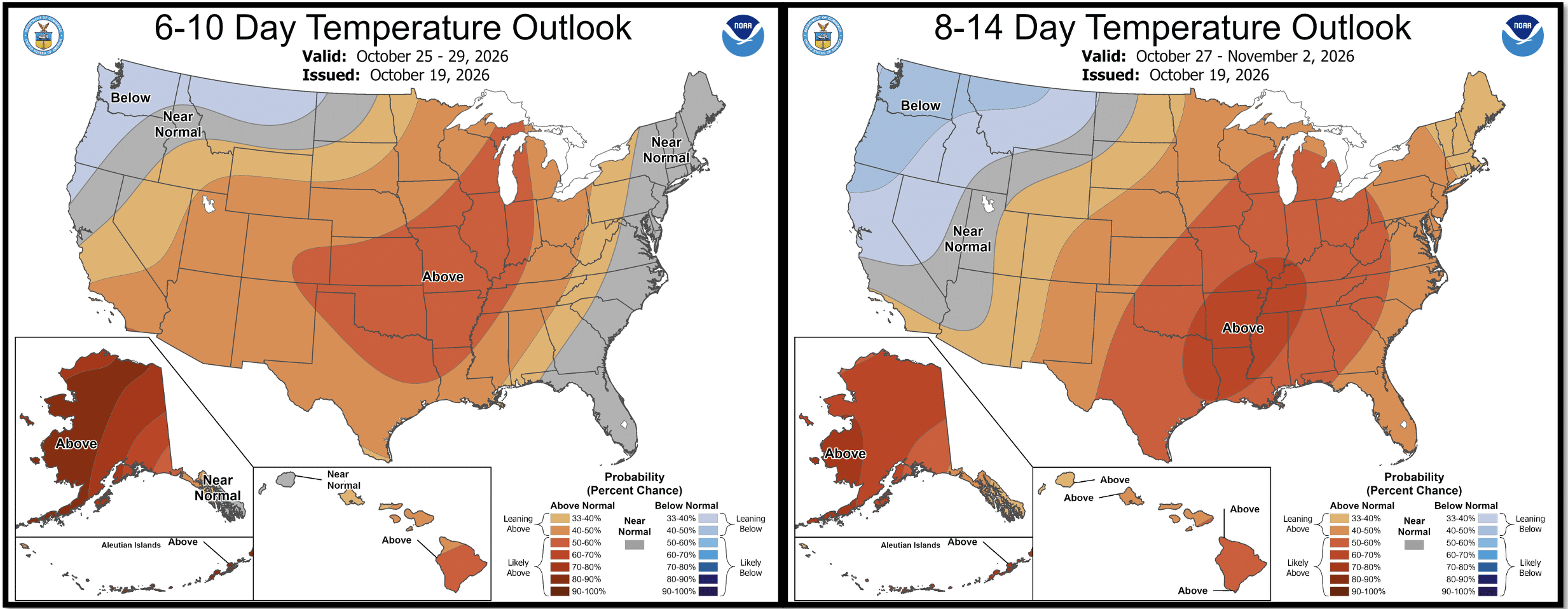
6-10 Day and 8-14 Day Temp Outlook
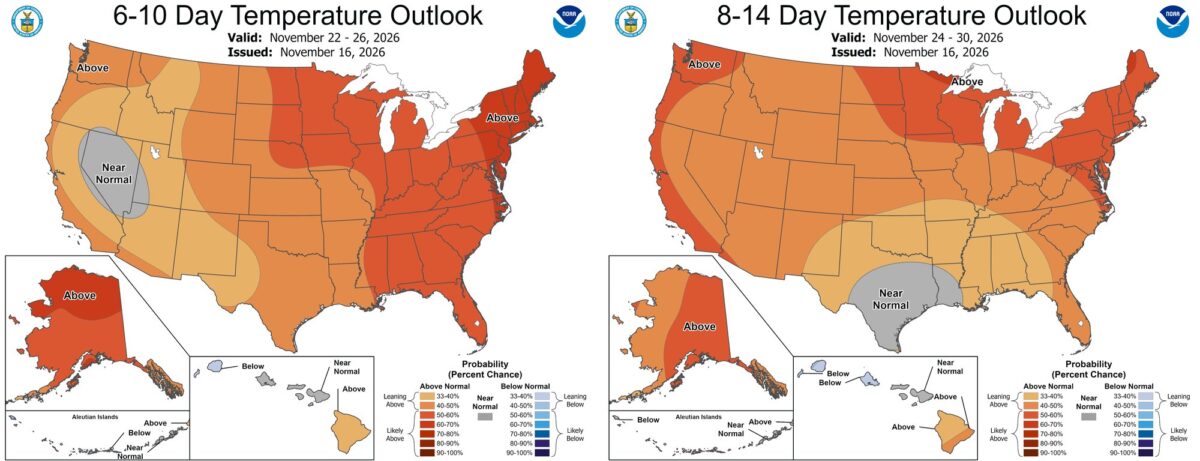
Warmer than normal weather will settle in over almost the entire U.S. over the next two weeks. This unseasonably warm front will be especially noticeable in the Northeast with temperatures in Boston and New York City reaching the upper 40’s and low 50’s into early December.
Next Three Months and Next Winter Natural Gas Pricing
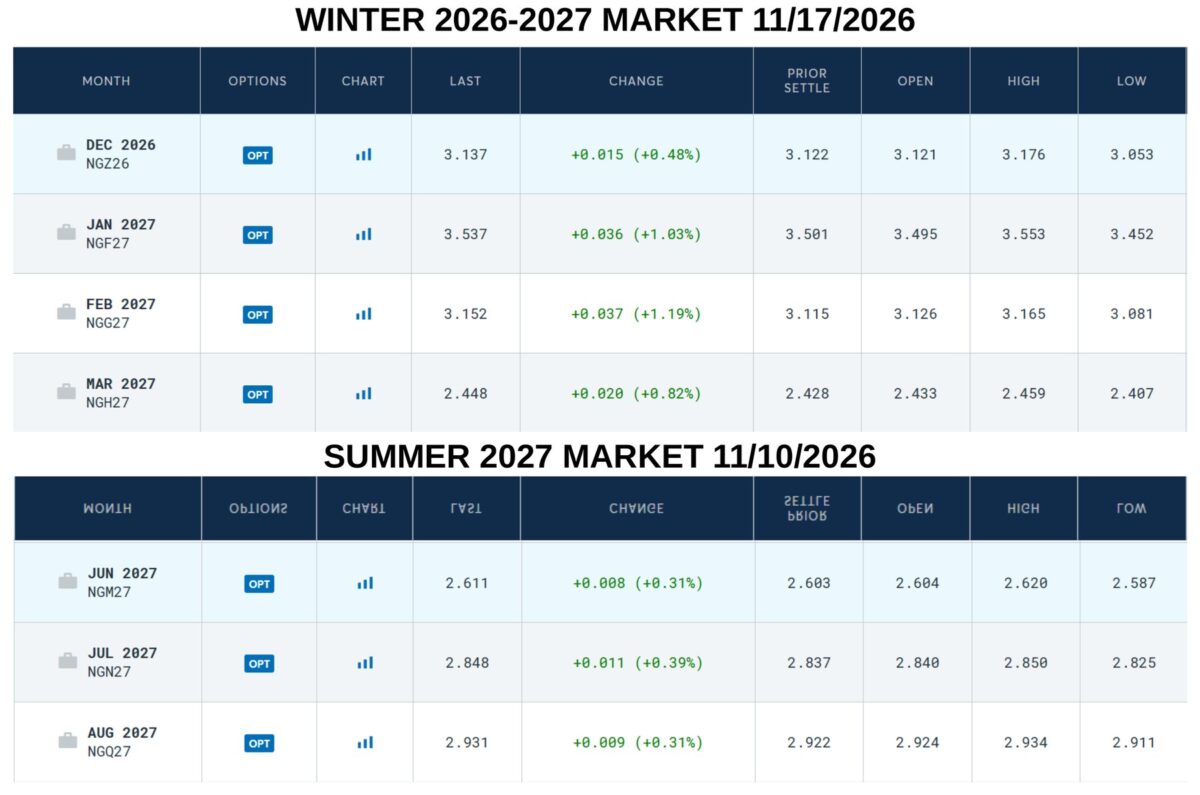
- The November settlement price on the NYMEX settled at $2.81, one of the lowest November settlement prices in the last ten years.
- With January almost down to $3.50 and February down to $3.14, hedging the gas for those two months would be a good play. Remember, one three-week winter event in 2026 sent the NYMEX above $7.50 last February.
Natural Gas Production, Lower 48 States
Production Snapshot
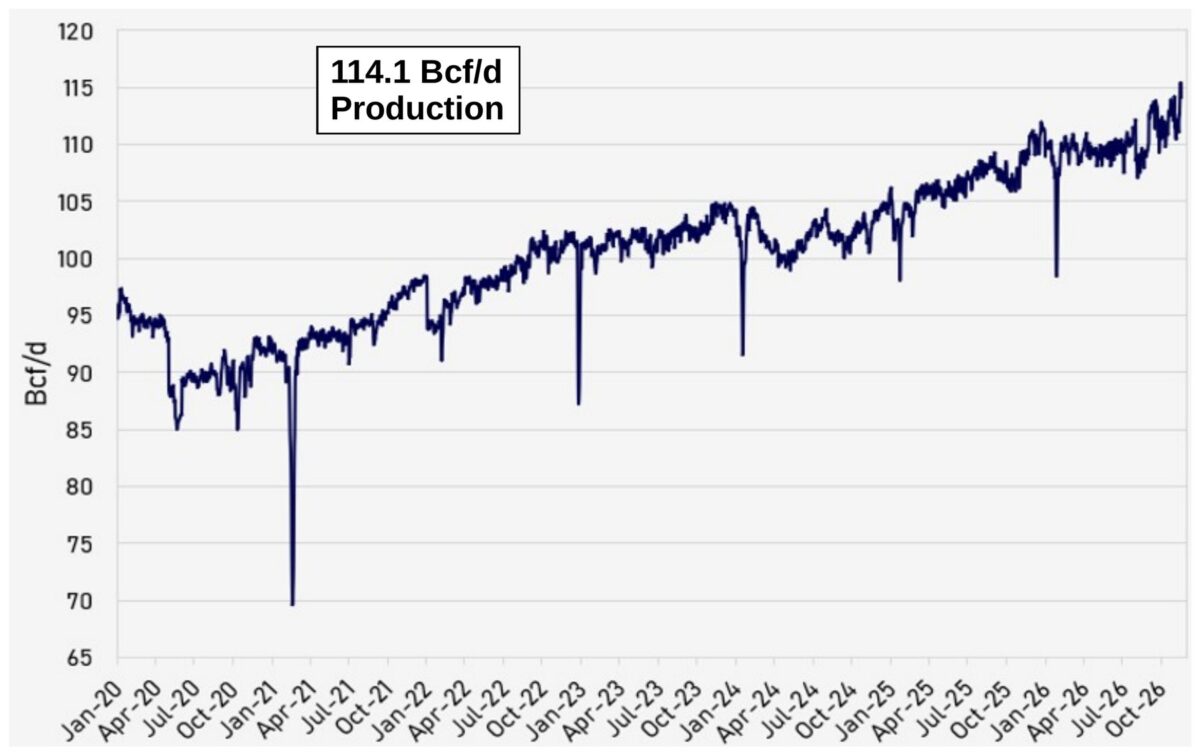
- Natural Gas Production surged to 114.1 Bcf/d last week, a new record.
- The three Bcf/d increase does explain the 20 Bcf increase in storage injections last week.
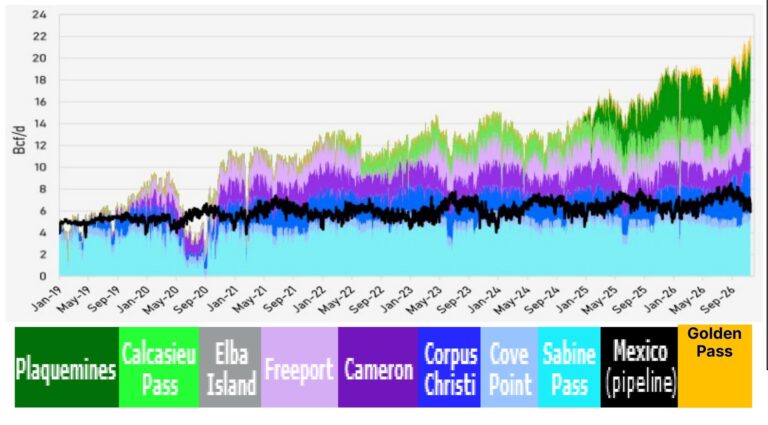
- Our LNG exports have increased by roughly 15 Bcf/d in the last ten years, excluding 2020 when the pandemic cratered demand. Our production has increased from 77.5 Bcf/d in 2016 to about 108 Bcf/d on average, an increase of 30 Bcf/d.
LNG Exports
- LNG exports reached 22.0 Bcf/d last week, this increased LNG amount has worked to keep prices from falling below $3.00 even though production is at an all-time high.
- Two more LNG facilities are expected to open in 2027, The Rio Grande facility which will export 3.9 Bcf/d when fully built out and Port Arthur which will export 3.4 Bcf/d when fully built out.
AD Hub Forward Electricity Pricing Trend Analysis
- Scheduled maintenance on power generating facilities across the U.S. resulted in September and October settling at more than $0.06 per kWh, well above what was predicted earlier in the year. Now that the maintenance is finished, pricing is back below $0.05 per kWh
- The 2029 opportunities we have recommended are beginning to disappear. Hedging 75% in March-June 2029 is still a viable option, The year overall, looks favorable and locking up the March-June and Sept-November is a good hedge to make now.
- You could also look at locking up the entire year in 2029, using the lower pricing during most of the year to offset higher pricing in January and July
Ampica Advise: The Demand-Side Advantage
Energy procurement matters—but reducing consumption is just as important. Even the best electricity rate can be outweighed by unnecessary energy use from inefficient HVAC equipment, aging lighting, or other avoidable facility loads.
“The cheapest electricity you have is the electricity you don’t use.”
Talk with an Ampica energy expert about a complimentary facility site audit. We can help identify practical energy-efficiency opportunities that reduce usage, control costs, and strengthen your long-term energy strategy.