Natural Gas Storage Outlook
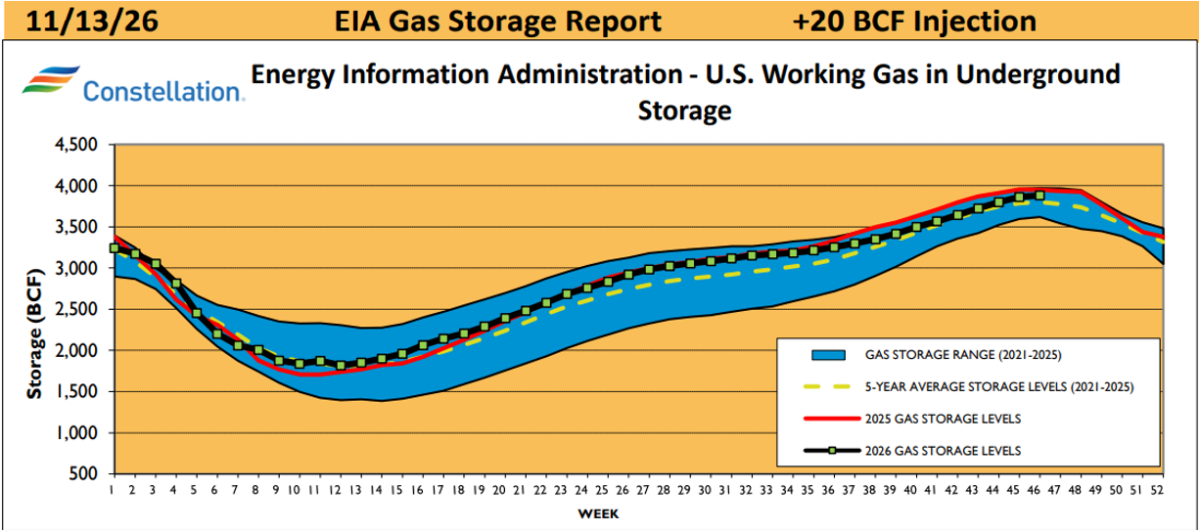
- Even though we are technically in withdrawal season where Natural Gas Storage reports typically show withdrawals from Natural Gas Storage, we are still experiencing injections into natural gas storage.
- This storage report for 11/13 showed an injection of just +20 Bcf, lower than the expected +27 Bcf injection, but still higher than the five-year-average of +15 Bcf, and larger than last year’s withdrawal of -6 Bcf.
- It’s a toss up whether or not we will have our first withdrawal for the 11/20 report next week. The more reports we have that remain injections, the fewer weeks we have until withdrawal season typically ends at the end of March, and the more natural gas we add to storage, which helps keep gas pricing depressed.
Big Reasons to Buy Now
What Should You Do?
- If you are using more than a million kWh annually, talk to your energy advisor about moving to a Load Following Index strategy or Managed Index strategy. This strategy allows you to buy blocks of energy when it is favorable and let the rest stay on the Day Ahead index rate. This is an excellent strategy that eliminates the premiums suppliers often place on the components of your electricity rate when they must fix it.
- Look at longer term agreements to allow you take advantage of lower blocks of energy in the future. 2029 is currently priced below market expectations. You may want to think about locking up 50-75% of the off-peak months or even locking up 75% of all of 2029, using the shoulder months to offset January and July, the highest months being priced now in 2029. It might be advisable to also hedge 25% of the coming January & February right now and then look at it again just before Thanksgiving. If it remains this low, look at locking up another 50%.One winter event can ruin pricing for the winter. Last winter saw mild temperatures in December, but a cold front that kept temperatures below freezing for much of the PJM Electric Grid for 15 days straight in late January early February sent pricing over $120.00 per MWh. Hedging 25-75% of next winter helps mitigate any random weather events as well as taking advantage of some low pricing currently available.
- Natural Gas users should be on what is called a NYMEX+ strategy. This generally provides greater savings than a fixed all-in contract. A NYMEX+ strategy takes an ‘adder’ that covers the suppliers’ costs for storage and the cost of doing business in that utility and adds it to the NYMEX settlement price for that month. So, if you have an ‘adder’ of $0.75 cents per Mcf and place that upon last years NYMEX Settlement price of $3.004, you will have a rate of $3.754 for that month. Much better when you consider fixed pricing for gas currently does not go below $4.50 per Mcf.
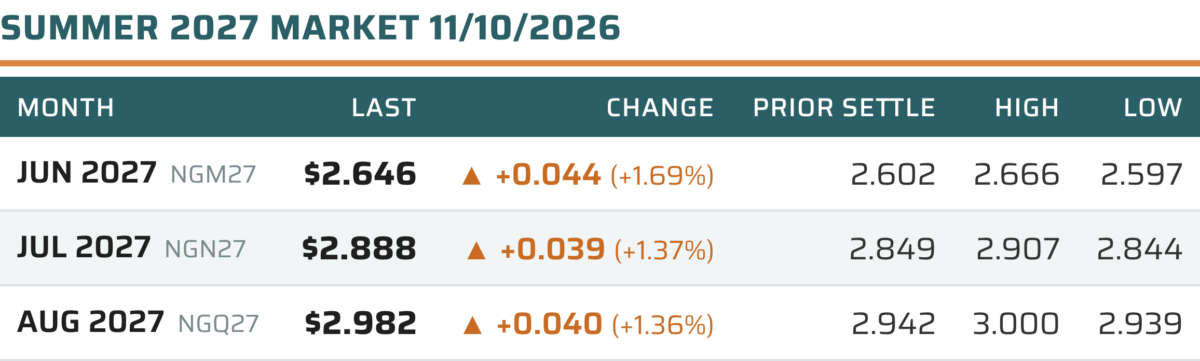
- Larger gas users that go through more than 50,000 Mcf a year should explore a managed strategy like the Managed Index strategy for electricity. Look at buying up blocks of gas in Winter 2027 which is still near $3.60 as well as Summer 2027 when natural gas prices are below $3.00.
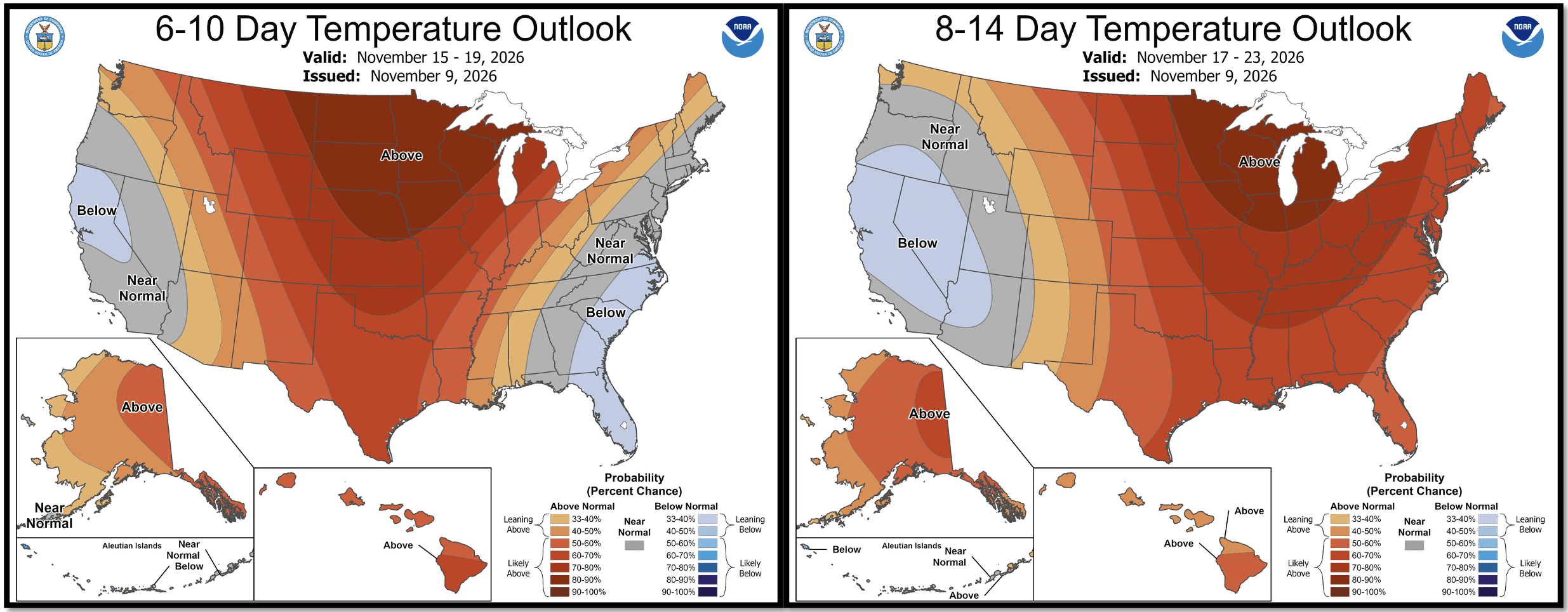
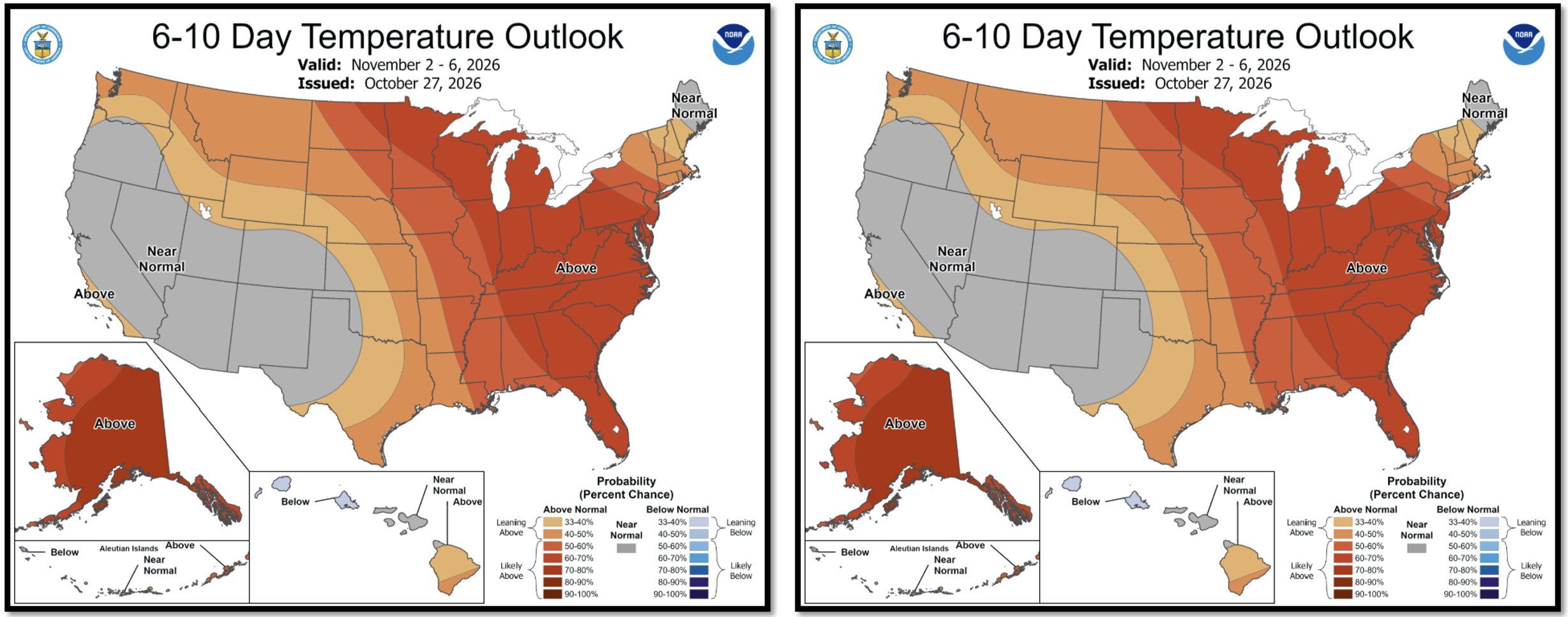
6-10 Day and 8-14 Day Temp Outlook
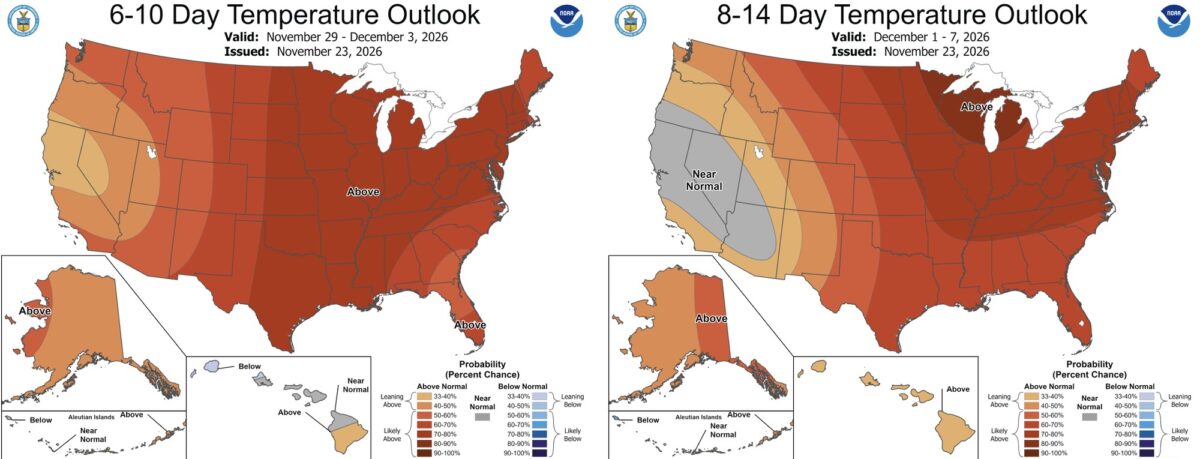
Warmer temperatures across almost the entire country over the next two weeks with only the California, Nevada, and Arizona states returning to normal temps eventually, which are not likely to result in large increases in heating degree days
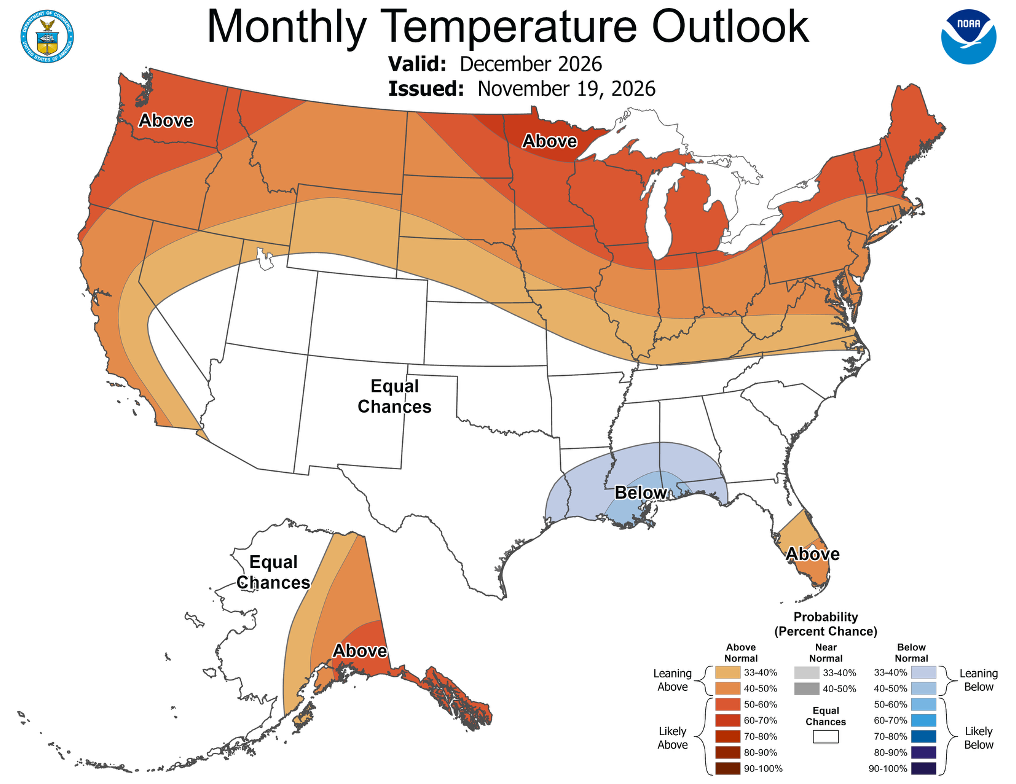
EIA Monthly Temperature Outlook for December 2026
- The month of December looks like it will be warmer than normal across the North, pretty much from the Mason Dixon Line in the East, the Upper Plains States and along the West Coast.
- The only area that looks like it will be below normal temps will be along the Gulf Coast and, let’s face it, that means temps are still in the 60’s and 70’s and not a big driver of heat demand.
Next Three Months and Next Winter Natural Gas Pricing
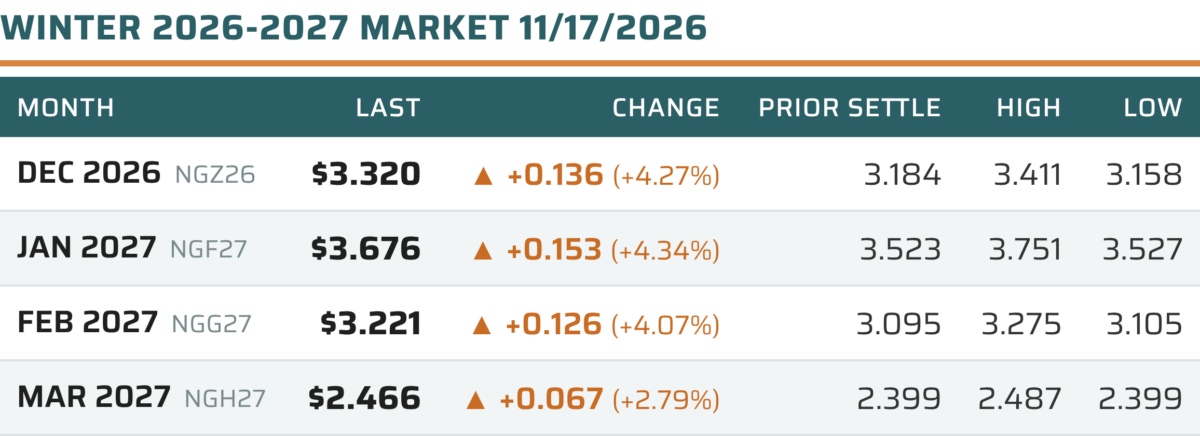
- The final December Settlement number should be out in the next day or two and a last minute buy-in of the gas market jumped the price of December gas by $0.13 cents.
- January also leapt up $0.15 cents as many are betting that gas at $3.50 in December, which is where it was just a week or two ago, is unlikely to last. However, market fundamentals; storage levels, predicted forecasts, a warmer jet stream from the Super El Nino, all may point to a record mild winter.
- Even with the $0.15 cent increase, it is still worth gauging what your siupplier is offering for a January-February Hedge and even looking at hedging now for the summer, where gas is currently trading below $3.00.
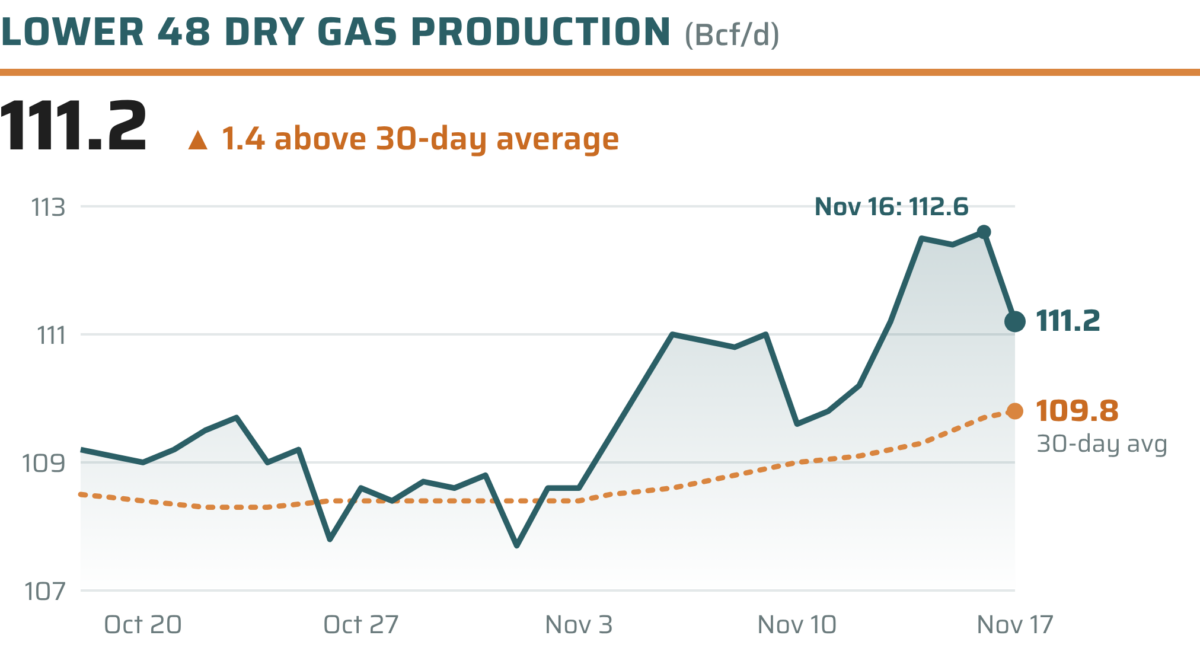
Natural Gas Production, Lower 48 States
- Natural Gas Production dropped a bit to 111.2 Bcf/d for the November 17th report.
- This is a 1.4 Bcf/d increase from the 30-day average and an almost 3.0 Bcf/d increase from this time last year.
- Our LNG exports have increased by roughly 15 Bcf/d in the last ten years, excluding 2020 when the pandemic cratered demand. Our production has increased from 77.5 Bcf/d in 2016 to about 108 Bcf/d on average, an increase of 30 Bcf/d.
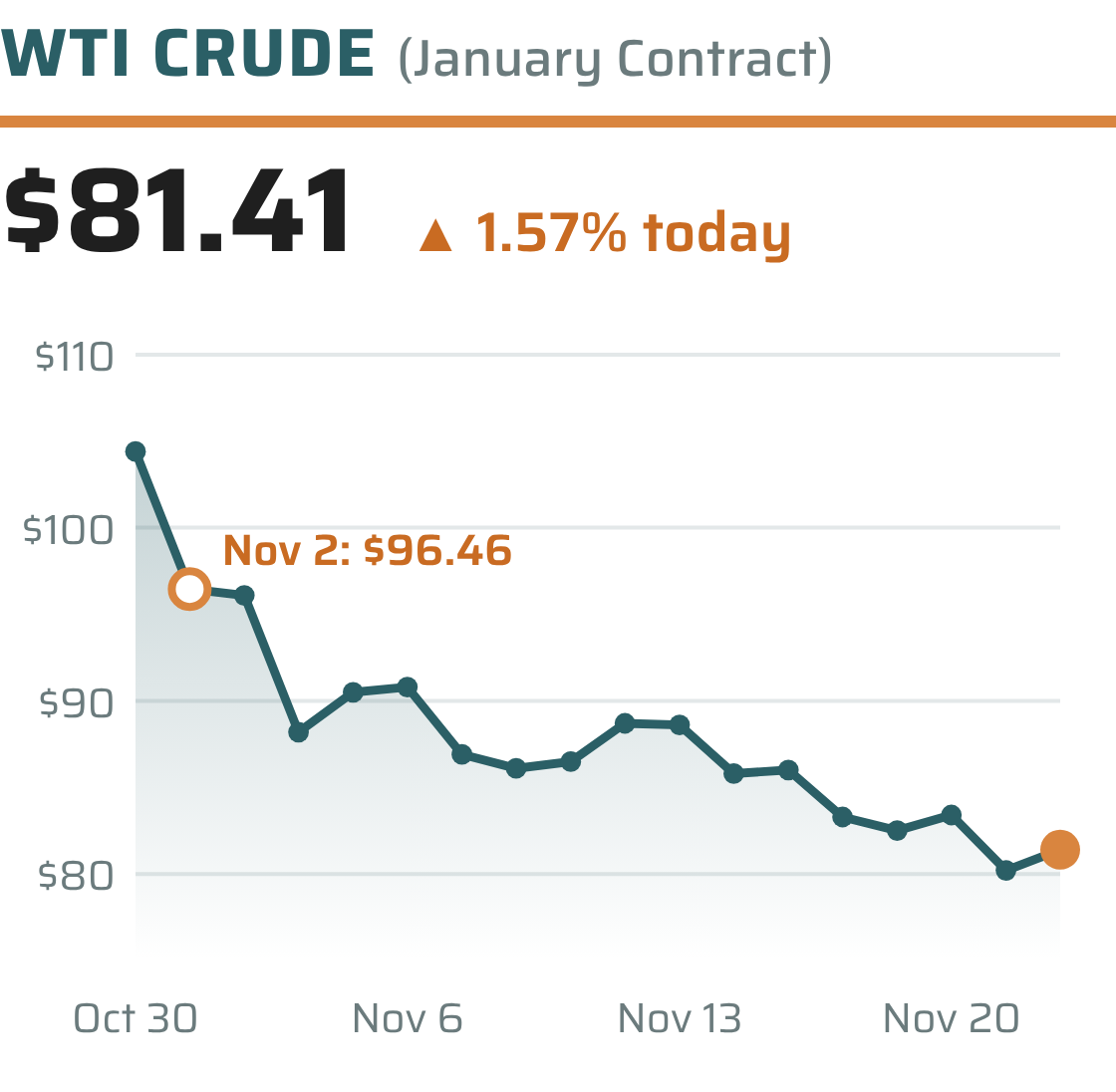
Lower Oil Pricing Could Lead to Higher Gas Pricing
- Associated natural gas production refers to the extraction of natural gas that is produced alongside crude oil from oil wells, rather than from dedicated natural gas wells.
- As the price oil rises, typically, oil drillers will drill more and produce more oil to take advantage of the higher price they can get for the oil they produce. As they increase drilling and oil production, they also produce more Associated Natural Gas which gets added to our Natural Gas Production numbers and to our storage depending on demand.
- Conversely, when oil drilling decreases, which it will do when oil prices drop, will cause less Associated Natural Gas to be produced, taking away from our production and raising Natural Gas prices.
- Look at the chart and you can see that oil has decreased $20.00 per barrel in the last month and if it does drop below $70.00, don’t be surprised if US drillers begin cutting back on oil production which will put upward pressure on Natural Gas prices.
Ampica Advise: The Demand-Side Advantage
Energy procurement matters—but reducing consumption is just as important. Even the best electricity rate can be outweighed by unnecessary energy use from inefficient HVAC equipment, aging lighting, or other avoidable facility loads.
“The cheapest electricity you have is the electricity you don’t use.”
Talk with an Ampica energy expert about a complimentary facility site audit. We can help identify practical energy-efficiency opportunities that reduce usage, control costs, and strengthen your long-term energy strategy.